
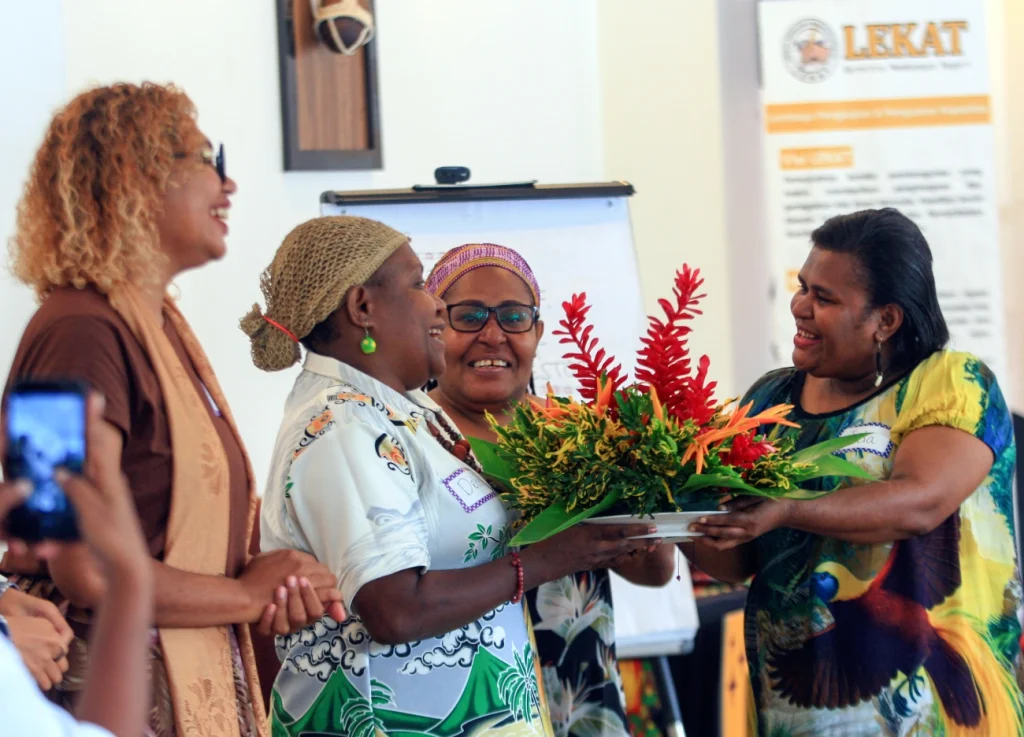
This profound question served as the departure point for PeremPuan Bersua(ra) Papua Hub, a gathering facilitated by WeSpeakUp.org in collaboration with LEKAT Papua in Jayapura from June 2–6, 2026.
Facing the dual challenges of movement fatigue and shrinking civic spaces driven by the socio-political dynamics in Papua, this initiative was designed not merely as a technical training ground, but as a space for collective care.
Over an immersive 5 days and 4 nights, this gathering provided a nurturing environment for 23 intergenerational women changemakers from across the customary territories of the Land of Papua, spanning Papua, West Papua, South Papua, Central Papua, Highland Papua, and Southwest Papua, to connect meaningfully, share best practices, engage in critical reflection, and unlock potentials for cross-community collaboration.
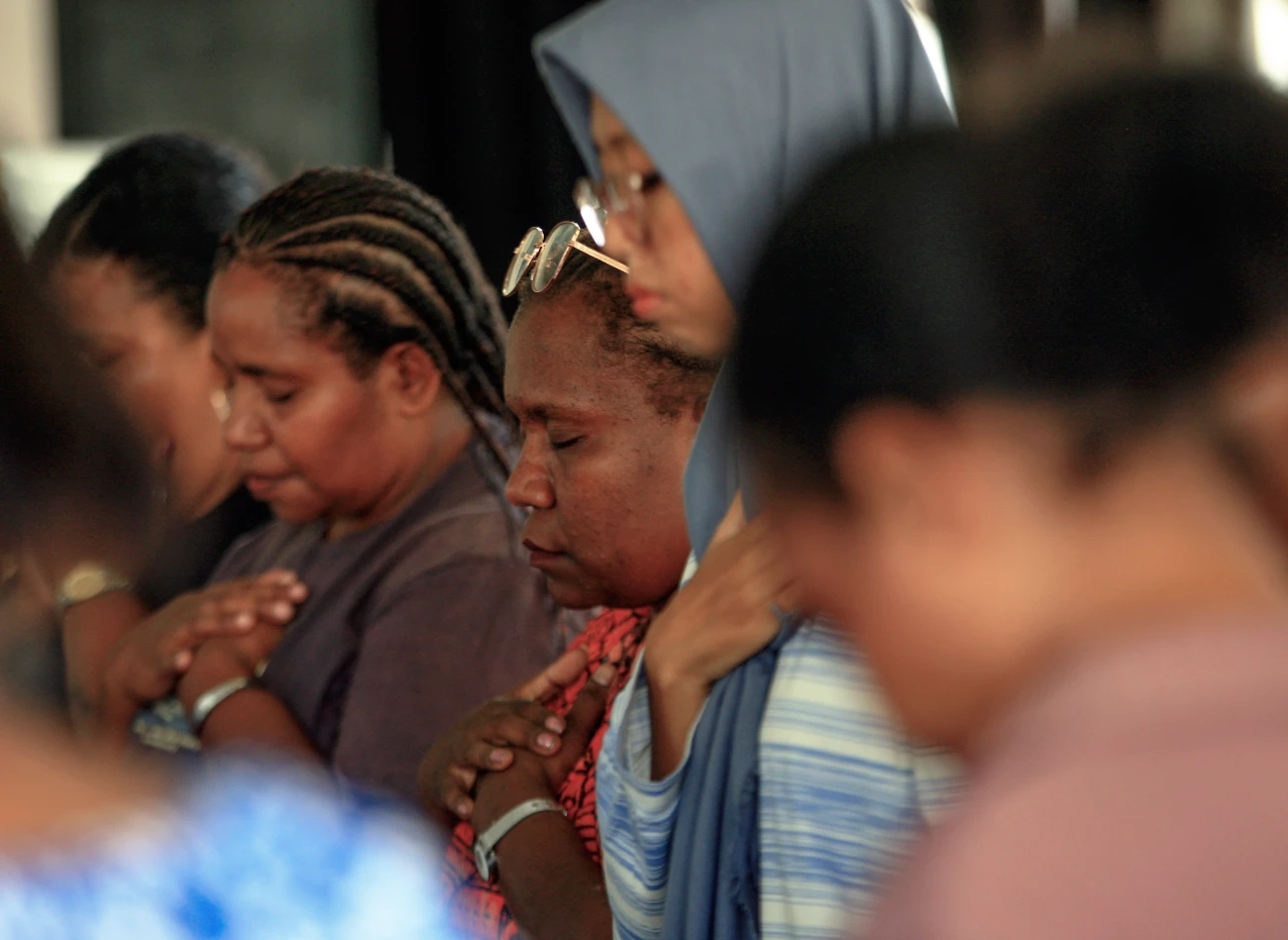
On the first day, this journey of collective care began from within. Mila Nuh initiated the process by facilitating a mindfulness practice that encourages participants to be fully present and cultivate a safe and supportive space among participants. This inner foundation was then ideologically anchored by senior Papuan indigenous women’s activist, Frida Kelasin through a profound reflection on the spiritual connection to land as the very root of Papuan women’s identity, belonging, and struggle.
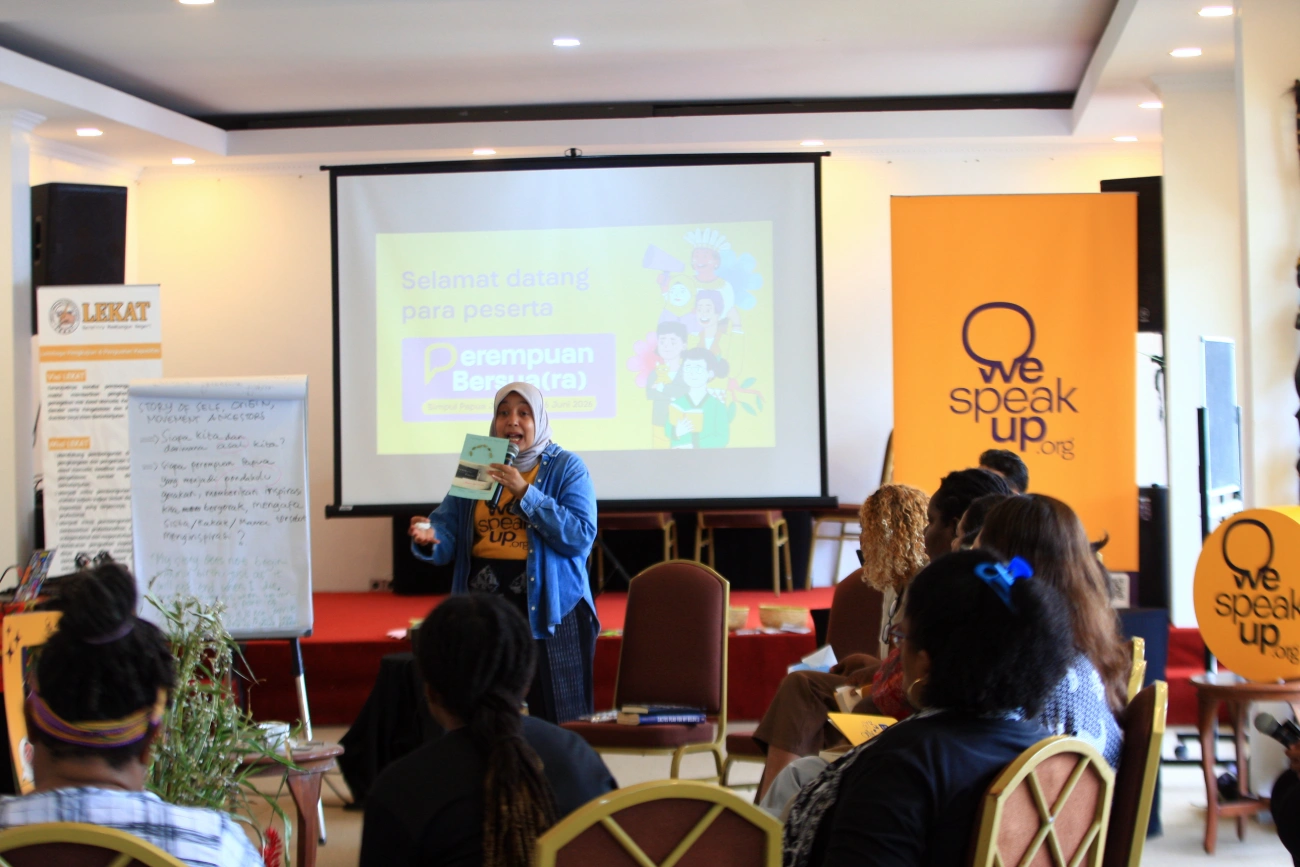
This reflection was further deepened by Sakdiyah Ma’ruf, who critically guided participants to document their live experiences, activist journeys, and the women figures who shaped their resistance through the Story of Self and Story from Movement Ancestor sessions.
On the second day, this reflective path was transformed into collective action during a best-practice sharing session on knowledge management. Participants learned from Rosita Tecuari, Chairperson of the Namblong Indigenous Women’s Organization (ORPA Namblong), about the critical importance of recognizing local wisdom, oral traditions, and women’s experiences as legitimate forms of knowledge in advocacy and social movements.
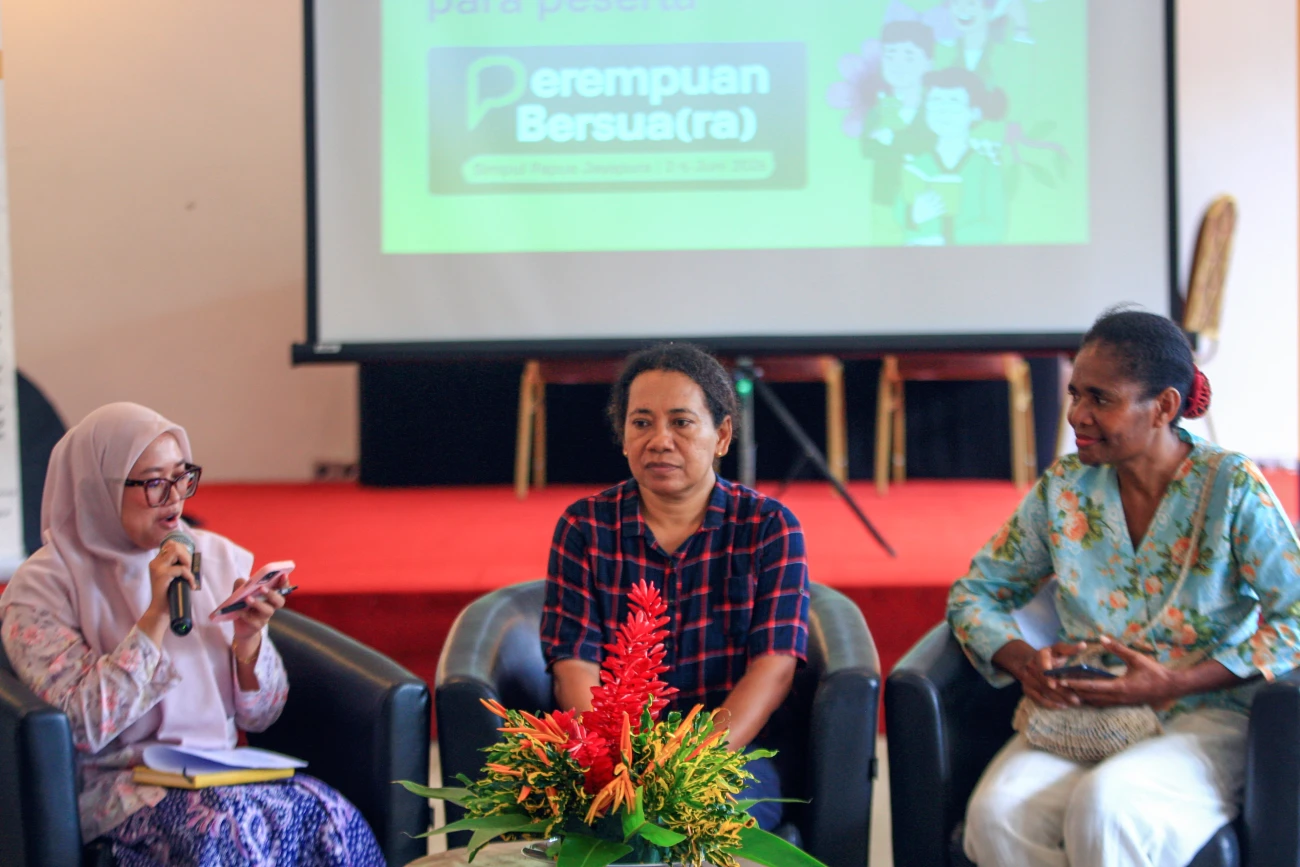
Alongside her, Angela Flassy, a journalist from JUBI Papua, equipped participants with tactical digital security protocols and risk mitigation strategies to build safe, relevant narratives capable of reaching younger generations.
Complementing this collective learning, Frida Kurniawati from WeSpeakUp.org shared the organization’s own best practices in nurturing grassroots knowledge through storytelling, from techniques for elevating personal experiences as entry points to understanding systemic issues, to bridging community stories with the broader public through various creative platforms and public engagements.
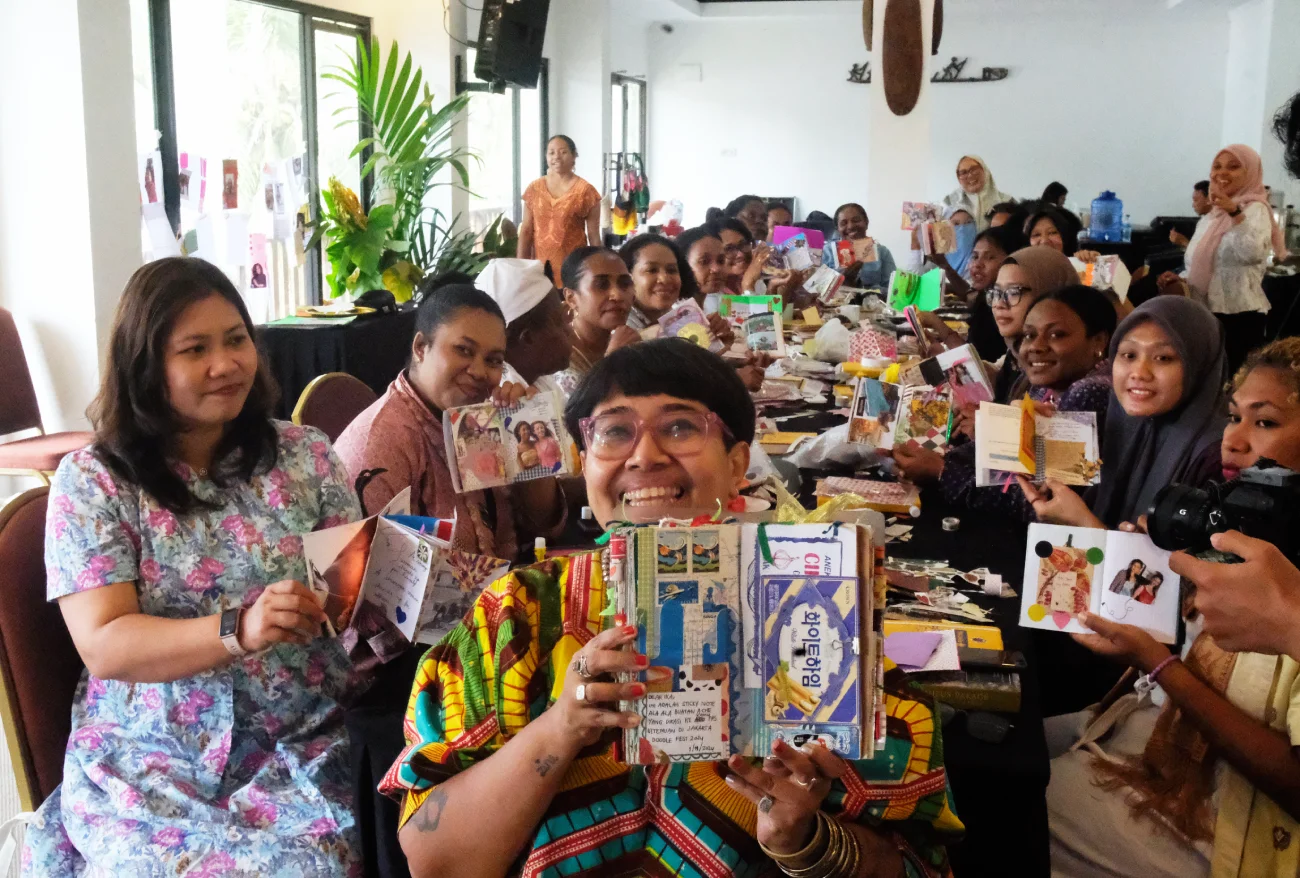
On the third day, this entire journey culminated in an immersive session of artivism, with artist, curator, and crafter Ika Vantiani. Ika invited participants to translate their experiences, memories, and collective knowledge into creative Sisterhood Journals, framing them not only as a form of narrative production or documentation of Papuan women’s stories, but also as a powerful medium for healing, reflection, and collective recovery.
Through this series of sessions and reflections, by the end of the gathering, participants successfully documented and archived the profiles and stories of the women leaders and changemakers from across Papua who had inspired their activism journeys. Furthermore, they successfully mapped out regional collaboration plans with peers in their respective areas to sustain the collective care spaces they had built together.
Far more than a conventional technical workshop, PeremPuan Bersua(ra) Papua Hub became a sanctuary for meaningful connection. It was a space to listen, heal, and reconnect the fragmented stories of Papuan women across diverse territories and battlegrounds.
From this room, a new network was born, forging vital intergenerational dialogue and collaborative blueprints to fortify the women’s movement in the Land of Papua.
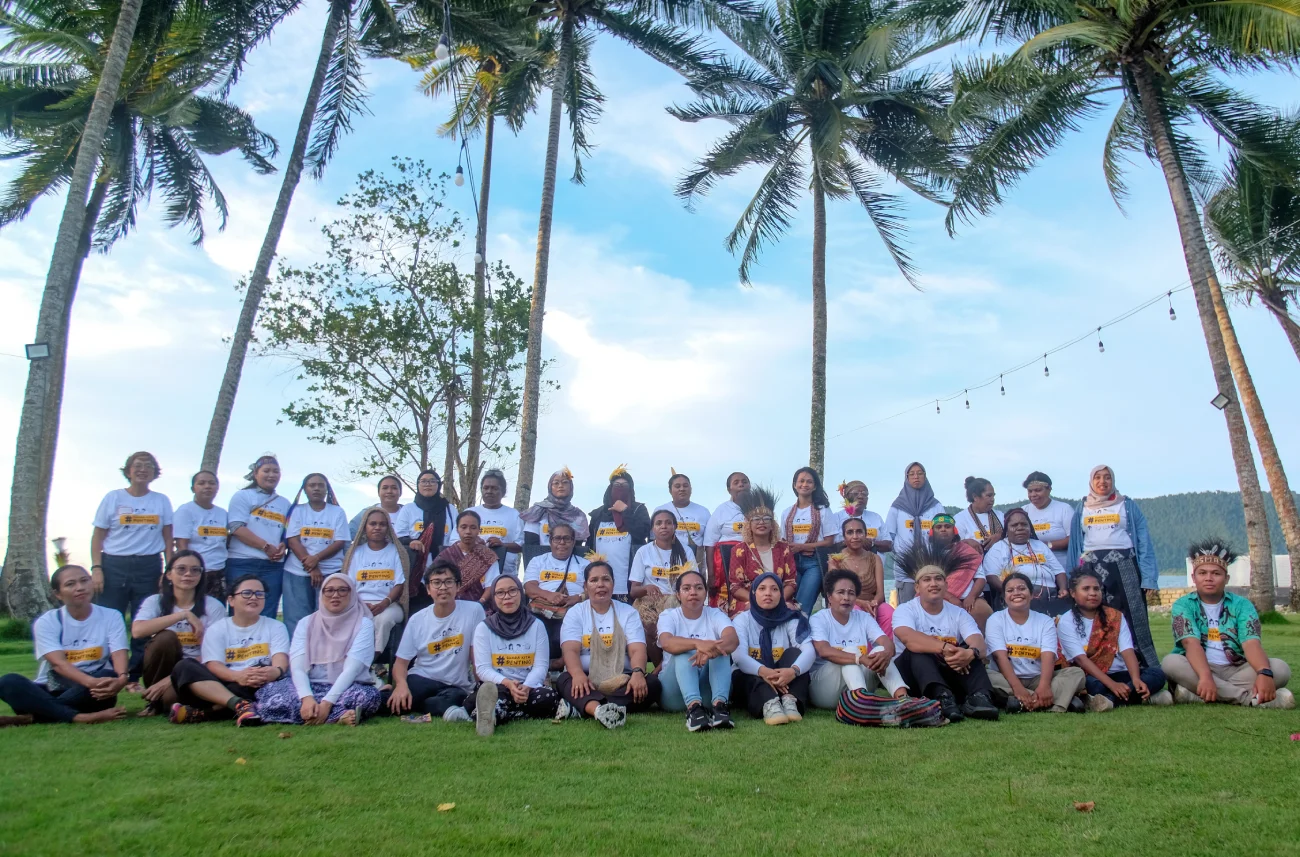
We believe that solidarity does not stem from shared experiences alone, but through a willingness to learn from one another, safeguard our collective knowledge, and build narratives deeply rooted in the stories, experiences, and lives of Papuan women themselves.
Author:
Mathilde Hutagaol
Program Team Leader, WeSpeakUp.org